 Français

Black mold removal sprays may work on small areas of surface mold, or appear to work at first. Still, they are not usually effective for more serious infestations. Mold is fungal growth, not bacteria, and when it appears in a residential or commercial property, it is often the result of underlying conditions such as excess moisture, insufficient ventilation, or water damage. While do-it-yourself sprays and homemade concoctions may reduce the visible appearance of mold, they do not always address the infestation at the source. The main problem with sprays for mold removal is that they cannot penetrate deep into porous materials, where mold can continue to grow. In some cases, sprays may also bleach mold stains without fully removing the mold itself.
By starting with a professional mold inspection in Toronto from experienced and certified remediation technicians, you can get a clearer understanding of where the mold is coming from, how far it has spread, and what is needed to remove it safely. Based on the findings from inspection and testing, your local mold removal team can determine an effective plan to remove black mold and contaminated materials while helping protect your indoor air quality and building materials.
Rather than try to eliminate mold on your own, contact a professional for a mold inspection in Toronto. With a professional mold inspection from Canada’s Restoration Services, our team will identify the full scope of the outbreak and the species of mold, and conduct thorough and efficient mold removal.
What Is In Most Mold Removal Sprays for Black Mold?
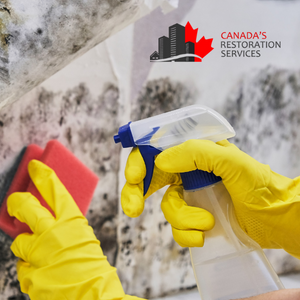 Typically, mold removal sprays purchased at local hardware and grocery stores have active ingredients like bleach, enzymes, surfactant encapsulators, or concrobium (a non-toxic anti-microbial cleaner).
Most of these products work by dissolving mold on the surface or stripping the colouring/melanin of the spore to remove dark staining via the process of chemical oxidation. These are short-term solutions for mold removal and are most effective in small outbreaks and non-porous materials like tiles, countertops, and tubs. When mold reaches building materials such as drywall, grout, and wood, a more advanced approach to remediation is required.
These DIY and black mold removal sprays do not compare to professional mold removal in Toronto when it comes to hidden mold, porous materials, and cross-contamination control. It’s generally recommended to call a professional mold removal company when an infestation surpasses 10ft square of visible coverage. Still, at Canada’s Restoration Services, we recommend checking in with our team about all visible mold and booking a free mold inspection. Mold can go a lot deeper than the visible surface, and it’s best to call in certified and licensed professionals sooner rather than later.
Here are some of the reasons black mold removal sprays don’t result in effective remediation.
Sprays Don’t Address the Root Issue
Using a black mold removal spray only removes the surface of the infestation. Despite the stain being gone, mold spores will still be lingering in the air or rooted within porous surfaces. As a result, these pesky mold spores will either grow back on the surface they’re rooted in or find another optimal place for growth within your property. Without conducting professional mold removal and addressing the source of the problem, mold will grow back rapidly anywhere in your property with the right conditions. Mold inspections in Toronto from Canada’s Restoration Services will identify the root cause of the mold infestation, if the species of mold is toxic, and implement a strategic and comprehensive plan of action to eradicate mold from your property.
Mold Removal Sprays Result in Cross-Contamination
Another concern with do-it-yourself mold removal is cross-contamination. When mold is disturbed without proper containment, spores can become airborne and spread to other building materials and areas of the property. This can happen when someone sprays, scrubs, wipes, or removes moldy materials without the right protective equipment, air filtration, and containment barriers in place.
The professional IICRC mold remediation process is designed to control this risk. During mold removal, technicians may use containment, negative air pressure, HEPA filtration, and careful removal procedures to help prevent mold spores from spreading beyond the affected area. Black mold removal sprays do not offer this level of control. While they may reduce visible mold on a small surface, they do not manage airborne spores, hidden contamination, or the risk of spreading mold into nearby rooms, HVAC systems, furniture, or other building materials.
Only Works on Some Surfaces
Mold removal sprays only work on solid, non-porous surfaces, such as stainless steel, plastic, and glass. On non-porous surfaces like these, mold spores are unable to become rooted within the material, and the mold is just surface growth. However, on non-porous surfaces, like couches, laminate or hardwood floors, and rugs, mold spores will dig deep into the material and grow from there. While black mold removal sprays will remove the surface stain on porous materials, they do not go any further than that.
Presents Possible Health Hazards
Not only are these sprays impractical and ineffective, but they may also put you at risk of developing health issues. By exposing yourself to mold while trying to eliminate it, you may develop adverse health effects, such as congestion, coughing, and sneezing. If you’re using mold removal sprays on a toxic type of mold, like black mold or aspergillus mold, you may face more serious symptoms, such as migraines, fatigue, and skin and eye irritation. In addition, if you end up inhaling the fumes from the mold removal spray, it may cause throat irritation and respiratory issues. If you choose to use mold spray on solid surfaces, wear personal protective equipment, like masks or goggles, to stay safe and healthy.
Mold Removal Spray Doesn’t Prevent Regrowth
Even if a black mold removal spray appears to remove visible staining, it does not necessarily prevent the mold from coming back. Mold regrowth happens when the underlying moisture problem, ventilation issue, or contaminated material is not properly addressed. If excess humidity, leaks, water damage, or damp building materials remain in place, mold can return even after the surface has been sprayed and wiped down.
Professional mold removal companies in Toronto focus on more than what is visible. As certified remediation technicians, Canada’s Restoration Services team identifies the source of the moisture, assesses the extent of contamination, removes affected materials when needed, and helps reduce the conditions that allow mold to grow again. After remediation, property owners should also take steps to control humidity, improve airflow, and address any water intrusion quickly. To learn more about long-term prevention, read our guide on how to prevent regrowth after mold removal in Toronto.
Professional Mold Removal Services Are the Safer and More Effective Way to Deal with Black Mold
To eradicate mold safely from your property, contact a professional restoration company for the
best and safest results. While black mold removal sprays may work on solid surfaces, mold has likely spread to other surfaces throughout your property. With mold inspections from Canada’s Restoration Services, our IICRC-certified, 5-star team will detect and remove mold effectively in your property, even in the hardest-to-reach areas.
Contact Canada’s Restoration Services today.