 Français

You notice it while cleaning, moving furniture, checking a storage area, or walking through a basement. A strange white patch has appeared on the wall, wood surface, ceiling corner, or behind stored items.
At first glance, it doesn’t look as concerning as black mold. It’s white. It looks almost like dust, powder, or a little patch of cotton stuck to the surface.
Many property owners make the same assumption: “It's only white mold. It’s probably not serious.”
That assumption is exactly why white mold problems often continue for months before they are properly addressed. In fact, many people only start searching for mold removal in Toronto after the mold keeps coming back or begins spreading to other areas of the property.
White mold is not simply a cosmetic issue. It is a sign that the environment has the right conditions for fungal growth, usually excess moisture, poor airflow, or a hidden water issue. The visible growth is often only the part you can see. The bigger concern is what may be happening underneath the surface.
Mold can develop behind drywall, under flooring, inside insulation, around structural materials, and in areas where moisture remains trapped.
The question is not only - “How do I remove this white growth?”, but the better question is - “Why did mold grow here in the first place?”
Because until the moisture problem is solved, mold has a reason to return.
What Exactly Is White Mold?
White mold is not a specific species of mold. It is a term used to describe mold growth that appears white because of its colour, texture, and growth stage. Different types of fungi can appear white, including:
- Aspergillus
- Penicillium
- Cladosporium
- Fusarium
The appearance of mold can change depending on its age, environment, and surface.
A patch that starts white may later appear grey, green, or darker as spores develop. This is why identifying mold based only on colour can be misleading. White mold commonly appears as:
- A fuzzy layer similar to cotton
- A powdery coating
- Small thread-like growth
- A soft-looking patch spreading across damp materials
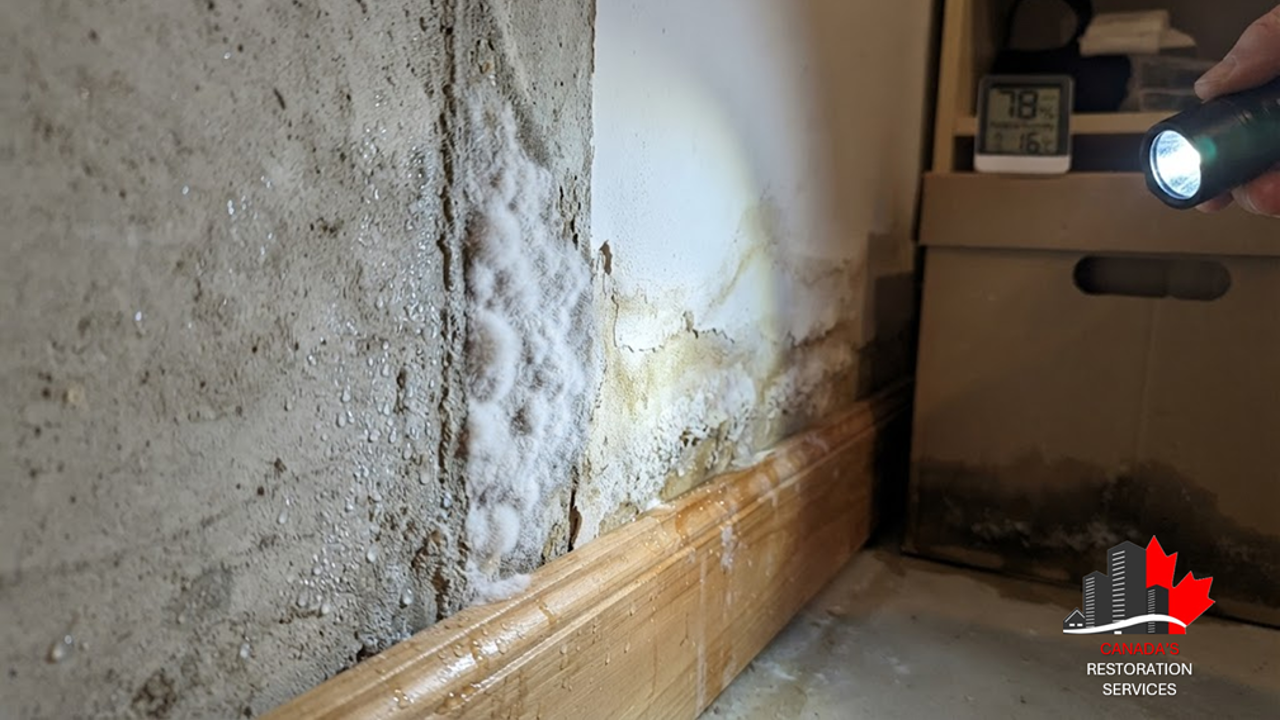
It commonly grows on materials that contain organic compounds, including:
- Wood framing
- Drywall paper backing
- Cardboard boxes
- Fabric materials
- Insulation
- Dust-covered surfaces
Mold does not need standing water to grow. Sometimes constant humidity, condensation, or a small unnoticed leak is enough.
Why Does White Mold Grow?
Mold growth requires 3 things:
- Moisture: This is the biggest factor. Common sources include:
- Plumbing leaks
- Foundation seepage
- Roof leaks
- Flooding
- Condensation
- Poor ventilation
- High indoor humidity
- A Food Source: Many building materials provide nutrients for mold, including wood, drywall, paper products, and fabrics.
- Suitable Conditions: Warm temperatures and limited airflow create an environment where mold can continue spreading. This is why mold often appears in areas that are rarely disturbed, behind cabinets, inside storage rooms, underneath flooring, or behind furniture placed tightly against walls.
White Mold, Mildew, or Efflorescence? How to Tell the Difference
Not every white mark is mold. Property owners often confuse three different issues:
White Mold
White mold is a living organism. It can:
- Spread over time
- Grow inside porous materials
- Return if moisture remains
- Affect indoor air quality
Mildew
Mildew is usually a surface-level growth. It commonly appears:
- On bathroom surfaces
- Around windows
- In areas with high humidity
It is usually easier to clean because it does not penetrate materials the same way mold can.
Efflorescence
Efflorescence is completely different. It is a mineral deposit caused when water moves through materials like concrete, brick, or masonry and leaves salt deposits behind after evaporation. A quick way to check:
- Mold usually feels soft or fuzzy.
- Efflorescence feels dry and powdery and may dissolve when exposed to water.
Knowing what you are dealing with matters because cleaning mineral deposits will not solve mold, and treating mold like a simple stain will not solve the moisture problem.
Is White Mold Dangerous?
White mold is not automatically more dangerous than other types of mold simply because of its colour. However, that does not mean it should be ignored.
Mold exposure can affect people differently. Some individuals may notice no symptoms, while others may experience:
- Sneezing
- Coughing
- Throat irritation
- Watery eyes
- Sinus discomfort
- Increased asthma symptoms
- Skin irritation
People who are more sensitive to airborne particles may notice symptoms more quickly, especially in areas with ongoing mold growth.
There is also another concern that is often overlooked, the condition of the property itself. When mold continues growing, it can affect materials such as:
- Drywall
- Wood
- Insulation
- Flooring materials
The longer moisture remains present, the greater the chance that repairs become more involved.
Where White Mold Commonly Appears in Toronto and GTA Properties
The climate in Toronto and the GTA creates several situations where mold growth can become a recurring issue. Cold winters, spring moisture, summer humidity, and temperature changes throughout the year can all contribute to condensation and moisture buildup. Common areas include:
Basements and Lower Levels
Basements are one of the most common locations because they are exposed to:
- Foundation moisture
- Water leaks
- Poor airflow
- Humidity buildup
Bathrooms and Washrooms
Repeated moisture from showers, sinks, and poor ventilation can create ongoing humidity problems. This applies not only to residential properties but also commercial spaces such as:
- Offices
- Restaurants
- Retail locations
- Multi-unit buildings
Attics and Upper Areas
Warm air carrying moisture can move upward and create condensation problems near colder surfaces.
Storage Areas
Storage rooms often become problem areas because:
- Air movement is limited
- Boxes trap moisture
- Leaks may go unnoticed
Commercial Buildings
Commercial mold issues can develop in:
- Office buildings
- Warehouses
- Industrial facilities
- Retail spaces
- Property management buildings
especially after water damage events or ongoing humidity issues.
Can You Remove White Mold Yourself?
For very small areas of surface mold on non-porous materials, cleaning may be possible. For example:
- Tile surfaces
- Glass
- Certain sealed materials
However, the biggest limitation with DIY cleaning is that you can clean what you see. You cannot confirm what you cannot see. A cleaning solution cannot tell you:
- Whether mold exists behind drywall
- Whether insulation has been affected
- Whether moisture is coming from a hidden leak
- Whether the affected area is larger than it appears
Many recurring mold problems happen because the visible growth is removed, but the moisture source remains. The mold disappears temporarily. Then it returns.
When Should You Contact a Mold Removal Professional?
Professional help is recommended when:
- Mold keeps returning after cleaning
- The affected area continues growing
- There is a persistent musty smell
- The property experienced flooding or water damage
- Mold may be inside walls, flooring, or insulation
- Multiple areas are affected
- You manage a commercial property and need proper documentation
At this stage, the solution is not another cleaning product. The priority becomes identifying the moisture source and understanding how far the problem has spread.
What Happens During Professional Mold Inspection and Remediation?
A proper mold assessment starts with understanding the cause. Professionals typically look at:
- Moisture levels
- Possible water entry points
- Hidden affected areas
- Building materials involved
- Air quality concerns
Depending on the situation, tools such as moisture meters and thermal imaging may be used to locate areas where moisture is present but not visible.
During remediation, proper containment methods and filtration equipment help prevent mold spores from spreading during removal. The goal is not simply removing the visible mold. The goal is correcting the conditions that allowed mold to grow.
Why Mold and Water Damage Often Go Together
Many mold problems begin with a water issue that was never fully resolved. Examples include:
- A slow plumbing leak
- Previous flooding
- Roof damage
- Foundation moisture
- Poor drainage
- Excess humidity
If affected areas are not properly dried, mold can return even after cleaning.
If the mold is linked to a leak, flood, or ongoing moisture issue, water damage restoration in Toronto is often the first step. Proper drying, moisture monitoring, and structural assessment help prevent mold from returning.
The Best Way to Approach White Mold
If you find a small area of mold, identify the moisture source, and it is limited to a hard surface, cleaning may solve the issue. But if mold is:
- Returning repeatedly
- Spreading
- Connected to water damage
- Located in hidden areas
- Affecting a commercial property
getting a professional assessment can save time, money, and unnecessary repairs later.
Canada Restoration Services helps property owners across Toronto and the GTA understand what is causing mold growth, how extensive the issue is, and what steps are needed to properly resolve it.
A mold problem is rarely just about what appears on the surface. It is about understanding why it appeared, and making sure it does not become a recurring problem.