

Why Does a Basement Still Smell Musty After the Water Is Gone?
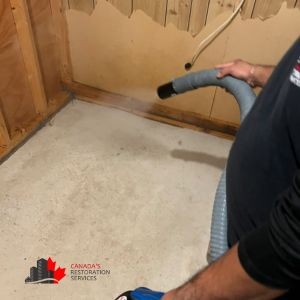
A musty basement smell after flooding often means moisture remains trapped in building materials, even though the standing water has disappeared.
Emergency Service Needed? We respond within 45 minutes
 Français
A musty basement smell after flooding often means moisture remains trapped in building materials, even though the standing water has disappeared.

Not everything exposed to floodwater needs to be discarded. Many hard surfaces, certain furniture pieces, and some personal belongings can be cleaned, dried, and restored.
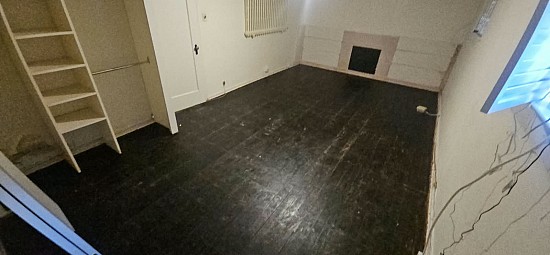
Repeated basement flooding usually means the original source of water intrusion was never fully corrected. Poor exterior drainage, foundation cracks, overwhelmed weeping tiles, sewer backups, and sump pump problems can all allow water to enter the same basement repeatedly. While basement flood clean up addresses the immediate damage, homeowners also need to identify why the water keeps returning.

Ontario's fall 2026 outlook, published by The Weather Network on September 9, 2026, calls for above-normal temperatures and an extended, milder fall, with below-normal precipitation overall and fewer classic fall storms than usual.
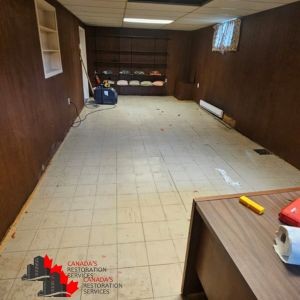
Yes. Many materials can be dried, cleaned, and restored after a basement flood, but the decision depends on where the water came from, how long materials remained wet, and whether they can be safely cleaned and dried completely.
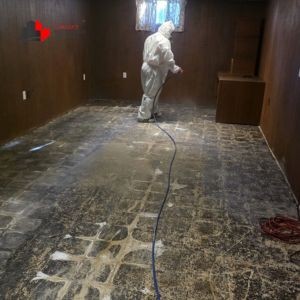
The honest answer is: right away, ideally within the first few hours. A basement flood clean up that starts fast can often save flooring, drywall, and belongings that would otherwise have to be thrown out, while a delay of even a day or two lets water soak deeper into materials and start creating conditions for mold.
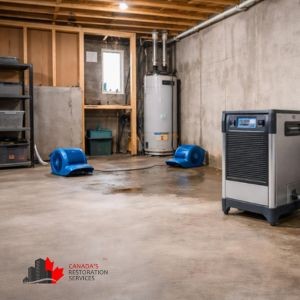
Basement flood restoration is a staged process that begins with making the area safe and controlling the source of the water.
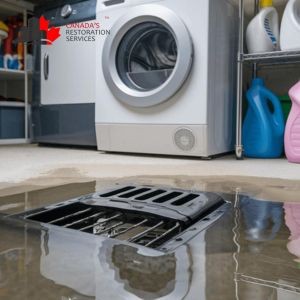
A blocked basement drain may first show up as slow drainage, gurgling sounds, unpleasant odours or water collecting around the drain.
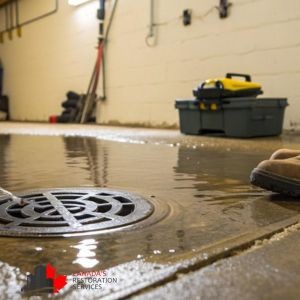
Flood cleanup addresses the immediate effects of water intrusion, including hazard assessment, extraction, moisture detection, drying, cleaning and removal of materials that cannot be restored.
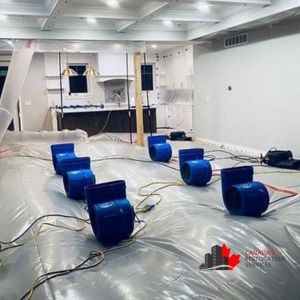
Sometimes you can remain at home during restoration, but only when the occupied areas are safe and can be fully separated from the work zone.
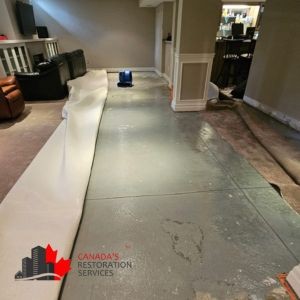
During flooded basement cleanup in Mississauga, the first steps are to stop the water source if possible, remove standing water, assess damage, dry the structure, and check whether mold may already be starting.
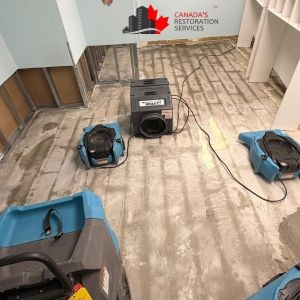
Water damage left untreated can lead to mold because damp building materials provide the moisture mold needs to grow. In some cases, mold can begin developing within 24 to 48 hours after water damage, especially when drywall, insulation, flooring, carpet, or wood remains wet.
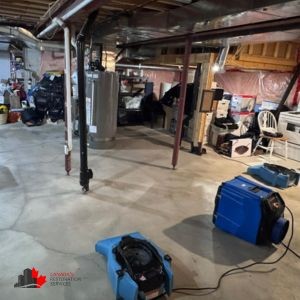
Cleaning up after a basement flood in Toronto starts with staying safe, stopping the water source when possible, and arranging proper extraction and drying. Basement flood clean up should happen quickly because moisture can move into drywall, flooring, baseboards, insulation, and stored belongings.
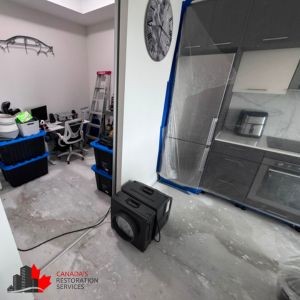
The cost of water damage restoration Toronto services depends on the source of the water, how much of the property is affected, how long the materials have been wet, and whether mold cleanup is also needed.

A mechanical fire, the kind that starts in an appliance, electrical panel, or HVAC system, doesn’t always cause the damage people expect. Once the fire itself is out, the water used to suppress it or the moisture trapped inside walls and flooring can turn into a second emergency that’s just as serious as the fire.

Spring is well underway, which spells frequent rain and an influx of runoff water due to melted snow brought on by warm temperatures. All this water could be overwhelming for your home’s infrastructure. The risk of your basement flooding is a real threat that you should consider, especially if you have a lot of snow accumulation around your home.

Foundation cracks often reveal themselves to homeowners and property owners in the Spring as they let melting snow and ground water indoors. These large cracks in the foundation of your property are typically the result of the freeze-thaw cycle and soil erosion.

Serious water damage in Montreal is always a challenge for property owners, but in warehouses, flooding, leaks, burst pipes, and other forms of water intrusion can cause complex problems. Warehouses typically hold large volumes of product, materials, and stock.

When it’s not the result of a burst pipe, leaks are often silent and difficult to detect. When they aren’t usually signs like a sudden spike in water bills or immediately visible signs, you may be experiencing water damage in Toronto without even realizing it. Water damage and leaks can cause property damage, mold infestation, and electrical damage

While there is a lot to think about, from insurance to your belongings, water removal is of the utmost importance. Investing in water damage restoration and removal ensures that damage is minimized.
 We Work with All Insurance Companies
Proudly Serving
Cities Across Canada
Canada's Restoration Services, IICRC-certified mold removal, asbestos abatement, and water damage restoration company in Toronto and the GTA, serving all of Canada since 2008. 34,000+ inspections. Mike Holmes trusted. 24/7 emergency response.