 Français

Cleaning up after a basement flood in Toronto starts with staying safe, stopping the water source when possible, and arranging proper extraction and drying. Basement flood clean up should happen quickly because moisture can move into drywall, flooring, baseboards, insulation, and stored belongings.
Flood cleanup also matters because hidden moisture can lead to mold problems later, including situations where attic mold removal or other mold services are needed in damp homes.
At Canada’s Restoration Services, we help Toronto homeowners respond to basement flooding with extraction, drying, cleanup, and restoration support.
Start With Safety First
 Before entering a flooded basement, check for electrical hazards. Do not step into standing water if it is near outlets, appliances, power bars, extension cords, or the electrical panel. If sewage, stormwater, or other contaminated water may be involved, avoid contact and keep children and pets away.
If it is safe to do so, turn off the source of the water. For plumbing leaks, this may mean shutting off the main water valve. If the water is coming from outside or from a sewer backup, avoid trying to handle the cleanup yourself.
Document the Damage
Before moving items, take photos and videos of the affected areas. Capture standing water, damaged flooring, wet drywall, damaged belongings, and the likely source of the flood. This can help with insurance documentation and give the restoration team a clearer idea of the scope.
Keep receipts, service notes, and records of communication with your insurance provider as the restoration process moves forward.
Remove Water and Start Drying Quickly
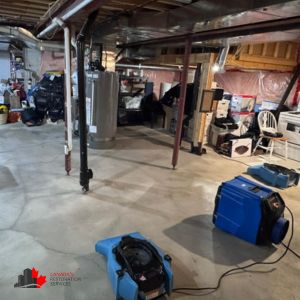
Flood cleanup should begin as soon as the area is safe. Removing visible water is only the first step. A proper basement flood clean up also requires drying equipment, dehumidification, moisture readings, and monitoring to make sure materials are drying properly.
Basements are especially vulnerable because they often have limited airflow and higher humidity. Water can stay trapped behind finished walls or under flooring long after the surface looks dry.
Watch for Mold After Flooding
After a basement flood, mold can develop if materials stay damp. Musty odours, staining, soft drywall, peeling paint, or recurring humidity can all be warning signs.
In some Toronto homes, moisture issues are not limited to the basement. Poor ventilation, high humidity, and past water damage can also contribute to attic mold concerns if damp conditions affect other parts of the home. This is why it is important to address moisture throughout the property, not just where the flood started.
Call for Professional Basement Flood Cleanup in Toronto
A basement flood can become worse if cleanup is delayed or incomplete. At Canada’s Restoration Services, we provide flood cleanup, drying, cleaning, and restoration support for Toronto homeowners. If your basement has flooded, contact our team quickly so we can help protect your home and reduce the risk of long-term water and mold damage.