 Français

A mechanical fire, the kind that starts in an appliance, electrical panel, or HVAC system, doesn’t always cause the damage people expect. Once the fire itself is out, the water used to suppress it or the moisture trapped inside walls and flooring can turn into a second emergency that’s just as serious as the fire.
This is where fire damage restoration and water damage restoration in Etobicoke often overlap, since one problem tends to lead directly into the other before homeowners realize it. Left unaddressed, that trapped moisture can also create conditions for mold growth, which is why mold removal in Etobicoke sometimes becomes part of the same job.
Here’s how a mechanical fire can turn into a water damage emergency and what typically needs to happen next.
How a Mechanical Fire Starts and Why It’s Different From Other House Fires
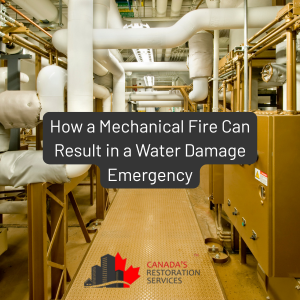 Mechanical fires originate in equipment rather than open-flame sources such as cooking equipment or candles. This means they may smoulder or begin as an electrical issue before they’re noticed. That can result in extensive smoke damage and, once the fire is suppressed, more water being used to fully extinguish flames burning inside a wall or appliance housing.
Why Putting Out the Fire Often Creates a Second Problem: Water Damage
Fire suppression, whether from a hose, extinguisher, or sprinkler system, can introduce significant amounts of water into the affected area. That water doesn’t necessarily stay where it lands. It can move into subfloors, wall cavities, insulation, and other porous building materials, often travelling farther than the visible fire damage. When fire damage leads to water damage, you may also find yourself in need of professional IICRC-certified mold removal in Etobicoke too. In which case, contact Canada's Restoration Services.
How Water Damage Spreads After Fire Suppression
Water follows gravity and moves through gaps in building materials, which means it can reach a basement or lower floor even if the fire started upstairs. When left standing or trapped inside construction materials, moisture continues causing damage after the fire itself has been extinguished.
Without proper extraction and structural drying, affected materials may weaken, swell, stain, or become difficult to restore.
Why Mold Risk Increases After a Fire-Related Water Event
Mold can begin developing within 24 to 48 hours under damp conditions. A fire-related water event often leaves materials wet in places that are difficult to see, including wall cavities, beneath flooring, and around insulation. This combination of moisture and organic building materials can create the conditions mold needs to grow.
What Fire Damage Restoration and Water Damage Restoration Involve Together
A combined restoration project typically includes water extraction and structural drying alongside soot, smoke, and odour cleanup. Moisture monitoring is used to confirm that affected building materials are sufficiently dry before reconstruction begins.
Depending on the extent of the damage, the process may include:
- Emergency water extraction
- Removal of unsalvageable wet materials
- Air movement and dehumidification
- Moisture inspections and monitoring
- Soot and smoke residue removal
- Odour treatment
- Mold assessment or remediation when required
- Repairs and reconstruction
Skipping the drying and moisture-monitoring stage in favour of a faster rebuild can leave moisture hidden behind new materials, increasing the likelihood of additional damage or mold growth later.
Restore Fire and Water Damage Together in Etobicoke
Our team at Canada’s Restoration Services is IICRC-certified and handles fire, water, and mold-related restoration throughout Etobicoke and the surrounding GTA. We provide 24/7 emergency response for situations involving fire suppression, flooding, damaged building materials, and other urgent restoration needs.
If a mechanical fire has left your property dealing with both fire and water damage, addressing both problems as part of a coordinated restoration process can help prevent a third issue from developing later.