 Français

Black mold in an attic usually starts small, with a dark patch near the roof deck or around the insulation, and gets worse the longer it sits. Attics are one of the most common places for it to develop, since heat, humidity, and poor airflow create exactly the conditions mold needs to spread.
Effective black mold removal isn’t just about scrubbing the surface. Attic mold removal that skips the actual moisture source, whether that’s a roof leak or poor ventilation, almost always leads to regrowth within a season. If you’ve noticed a musty smell or discolouration in your attic and need mold removal in Toronto or the surrounding area, here’s what actually needs to happen to remove it for good.
Why Black Mold Shows Up in Attics Specifically
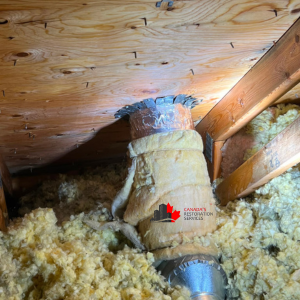 Attics sit directly below the roof, making them one of the first places affected by leaks, condensation, and trapped heat. Warm, moist air rises from the living spaces below and gets trapped against a cold roof deck, especially during Toronto’s seasonal temperature swings. This creates condensation that soaks into wood framing and insulation over time. Add limited airflow from blocked soffit vents, and the space becomes an easy target for mold spores already present in the air.
Signs of Black Mold vs. Ordinary Surface Mold
Not every dark patch in an attic is black mold, but a few signs may point toward a more serious problem: a musty smell that doesn’t fade, staining that spreads rather than staying contained, or mold that returns quickly after being wiped away. Some active mold may also appear damp or slimy, while other types can have a dry or powdery texture.
Appearance alone cannot reliably confirm the type of mold present. A professional inspection or mold test may be needed to identify the issue and determine the appropriate remediation approach.
What Safe Black Mold Removal Actually Involves
Black mold removal starts with containing the affected area so spores don’t spread to the rest of the attic or enter the home’s air supply through vents and other openings. From there, affected materials are either cleaned or removed depending on how porous they are and how extensively the mold has spread. Mold that has penetrated insulation or other porous materials may not be fully addressed through surface cleaning alone.
Post-remediation verification or testing may then be used to confirm that the affected area has been properly treated instead of only addressing the mold that was visible.
Why Attic Mold Keeps Coming Back Without Fixing Ventilation
Removing the mold itself only solves half the problem. If the attic continues to trap heat and moisture, new mold growth may develop under the same damp conditions. That’s why attic mold removal that includes a ventilation assessment and addresses any roof leaks or other moisture sources found along the way is more effective than a cleaning-only approach.
When It’s Time to Call a Professional for Black Mold Removal in Your Attic
Small, isolated spots on non-porous surfaces may sometimes be manageable without professional help. However, mold that covers a large area, has spread into wood or insulation, or keeps returning after cleaning usually requires a professional assessment. This helps ensure the mold is removed safely and that the underlying moisture source is identified.
Our trusted and insured team at Canada’s Restoration Services handles mold removal for Toronto homeowners and property owners throughout the GTA, including Etobicoke and surrounding areas. We are IICRC-certified for the inspection and remediation work involved in a project like this. If you’re dealing with attic mold and want to know what’s actually causing it, we can help you identify the source before the problem spreads further.