 Français

Old flooring in homes and other types of properties in the Greater Toronto Area that were built or renovated in and around the 1980s is likely to require asbestos removal in Toronto. The hazardous mineral was used for many reasons in flooring and many floor types. From vinyl floor boards and tiles to adhesives, they are used because of their durability and fire resistance. Today, as property owners set out to upgrade their flooring or conduct renovations, it’s essential to consider that asbestos floor tile removal may be necessary. At Canada’s Restoration Services, our experienced and certified team can help you correctly identify asbestos flooring. If the mineral is confirmed, we can execute safe, timely, and compliant abatement. To get started, book an inspection and asbestos removal cost estimate.
Here are three types of asbestos flooring that may have been used in your commercial or residential property’s construction.
Vinyl Asbestos Tiles
Vinyl asbestos tiles were especially popular between the 1950s and the 1980s because they were low-cost, durable, and resistant to heat and chemicals. Most often, these tiles came in 9x9 or 12x12 inch squares, and the asbestos was usually mixed directly into the vinyl or used in the adhesive. Over time, as these tiles wear down, they can release dangerous asbestos fibres into the air, especially when they are cracked, sanded, or removed incorrectly.
If you see older square tiles in a basement or kitchen that are discoloured or lifting, avoid disturbing them. Instead, contact Canada’s Restoration Services for an asbestos inspection. Our experienced technicians will safely determine if asbestos floor tile removal is needed and give you a clear breakdown of your asbestos removal costs so you can plan accordingly.
Asphalt Tiles
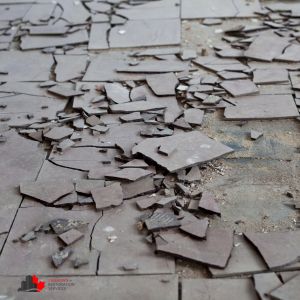 Asphalt-based tiles are another common type of asbestos flooring found in older buildings. These tiles were created by combining asphalt and asbestos fibres, giving them a heavy, dark appearance and a dense, hard texture. While they’re less common today, you may still come across them in older basements, industrial buildings, or commercial facilities.
Like vinyl tiles, asphalt tiles are hazardous when broken or tampered with. Because they were often installed with asbestos-based mastic or glue, disturbance of either the tile or the adhesive can pose health risks. If you see what resembles asbestos asphalt tiles, don’t try to investigate yourself, especially if the materials look to be degrading with time. Contact our asbestos removal team in Toronto for tips on how to proceed safely.
Linoleum Flooring
Many people confuse old linoleum flooring with vinyl. Still, some older linoleum materials were reinforced with asbestos to improve fire resistance and durability, rather than being mixed into the material directly, which means that typically, with cases of asbestos and linoleum flooring, it’s not the linoleum itself but the backing. However, because they’re installed together, lifting the tiles or investigating yourself can risk asbestos exposure, mainly because these materials are often found in poor condition due to age and water exposure, which increases the risk of fibre release.
Navigate Asbestos Floor Tile Removal Safely in Toronto with Canada’s Restoration Services
If you’re considering replacing your flooring in an older home, a professional inspection is the best first step. We’ll help determine if your project will require asbestos floor tile removal and provide a full quote outlining asbestos removal costs, timelines, and expectations. Our trained technicians at Canada’s Restoration Services are fully licensed and experienced in dealing with these types of materials safely.