 Français

A basement usually smells musty after water damage because moisture is still trapped somewhere in the space, even if the floor looks dry. After a leak, flood, sump pump issue, sewer backup, or foundation seepage, water can move into drywall, carpet, baseboards, insulation, storage boxes, and framing. When moisture remains, mold can start growing behind finished surfaces and create the stale, earthy odour many homeowners notice. If the smell does not go away, mold testing services and professional mold removal in Toronto may be needed to find the source.
At Canada’s Restoration Services, we help Toronto homeowners identify where moisture is hiding, whether mold is present, and what needs to happen next. Musty odours should not be covered up with air fresheners or dehumidifiers alone. When it comes to mold detection, mold removal and water damage restoration in Toronto, trust our IICRC-certified team at Canada’s Restoration Services.
Why Basements Hold Moisture After Water Damage in Toronto
 Basements are naturally more vulnerable to moisture because they sit below grade. In Toronto homes, heavy rain, melting snow, foundation cracks, poor grading, window well issues, plumbing leaks, and appliance failures can all send water into the basement.
Even after visible water is removed, dampness can remain behind walls or under flooring. Carpets and underpadding are especially problematic after a flood or leak because they can hold moisture below the surface. Due to its porous structure, drywall can also absorb water upward, which means the visible stain may only show part of the affected area.
This is why a basement can smell musty days or weeks after the initial flood or leak, especially without the intervention of professional water damage restoration in Toronto. The odour is often a sign that materials are still damp or that microbial growth has started.
Common Hidden Mold Areas in Toronto Basements
Mold does not always grow in open, visible areas. After basement water damage, it may develop behind baseboards, inside wall cavities, under carpet, around stored items, behind shelving, or near exterior foundation walls.
Storage areas are also a common problem. Cardboard boxes, fabric items, wood furniture, and paper materials can absorb moisture and support mold growth if they remain damp. A basement may look mostly clean, but one wet storage corner can create odours throughout the space.
If you notice musty smells that are stronger near a wall, closet, storage area, or carpeted section, it is worth booking an inspection before the issue spreads.
When Mold Testing and Inspection Help
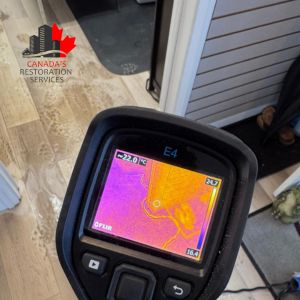
A mold inspection helps identify visible growth, moisture sources, and building materials that may be affected. Moisture meters and thermal imaging may also be used to locate damp areas that are not obvious from the surface.
At Canada’s Restoration Services, we use inspection, third-party testing, and professional assessment to guide the next steps rather than guessing based on smell alone.
When Is Mold Remediation Needed?
If mold is found on porous materials like drywall, carpet, insulation, or wood, cleaning the surface may not be enough. Mold can grow into materials and return if moisture is still present. In these cases, mold remediation Toronto services may be needed to remove contaminated materials, clean affected areas, and address the moisture source.
Professional remediation may include containment, HEPA filtration, safe removal, cleaning, disposal, and post-remediation verification. The goal is not only to remove visible growth, but to prevent spores from spreading into other parts of the home.
Do Not Ignore a Musty Basement; Call the Professionals at Canada's Restoration Services
A musty smell after water damage is a warning sign. It may point to hidden moisture, early mold growth, or contaminated materials that need attention.
If your Toronto basement still smells damp after a leak or flood, contact Canada’s Restoration Services. We provide mold inspections, mold removal Toronto services, and mold remediation Toronto support to help protect your home, indoor air quality, and long-term property value.